.svg)


.svg)


.svg)


%201Q26_%20GRC%202029.png)


.svg)

.svg)



How to build a localization team
Building a team takes more than just hiring a few people – it also requires the foundation of a strong and unique team culture that fits within a company. In today’s remote world, it’s more important than ever that teams embody shared values to create a safe space for collaboration, efficiency, and psychological safety.
In this session, Localization Career Coach Hristina Racheva uncovers what it takes to build a localization team from the ground up by sharing her experience of doubling her team’s size during the pandemic, their growth path, and how they managed everything across three different countries. She also digs deeper into how she conducts team check-ups, decides who to hire (generalists, specialists, senior, entry-level, etc.), identifies the team’s characteristics and gaps, and more.
Whether you are a hiring manager trying to build a team from the ground up, a leader of an existing team, or an individual contributor in a localization team, you can learn from this webinar:
- How to identify the roles your team needs
- Key elements for successful on-boarding
- Importance of team spirit and collaboration
- Ways your team can learn and grow together
- Tips for managers and leaders
Onboarding
Research has shown that being systematic in onboarding brings new employees up to speed 50% faster, which means they can start contributing to achieving desired goals in a team more quickly and efficiently.
For this reason, onboarding is more of an integration. “Integration” suggests having a more aspirational goal — doing what it takes to make the new person a fully functioning member of the team as quickly and smoothly as possible.
Your Role as a Manager
Onboarding is complex and requires a well-rounded process. While everyone from the teams is involved with and supports the new hire, no one has a bigger impact on new employees’ success than the managers who hired them. That’s because the managers understand what the new hires need to accomplish and what it will take — skills, resources, and connections.
- Understand their challenges. Onboarding is hard for new hires, even if they are experienced professionals. They are unfamiliar with the business, don’t understand how certain things work within the organization, lack established relationships, and have to adapt to a new culture. Research has shown that challenges in the latter two categories are the biggest reasons for quick turnover. New employees have to learn a lot and may be feeling quite vulnerable, even when they seem outwardly confident. Some might respond by playing it safe and sticking too much to what they already know, rather than asking questions and figuring out how to add value. So it’s important to reassure them that learning is more critical than doing in the early days. To set the expectations, be clear about how they will be evaluated during the onboarding process while also discussing long-term expectations and career development.
- Make them part of the team. The sooner the new team member builds effective working relationships with their peers, the better, and there’s a lot a hiring manager can do to make this happen. The starting point is to ensure the team understands why the person has been hired and what roles they will play. Then make sure the team connects with the new person individually to get to know each other on a personal level.
- Connect them with key stakeholders. One simple way bosses can facilitate these connections is making a list of names, including brief notes on each, and making introductions.
- Help them get early wins. Early wins are a powerful way for incoming employees to build confidence and credibility.
Onboarding is Multidimensional
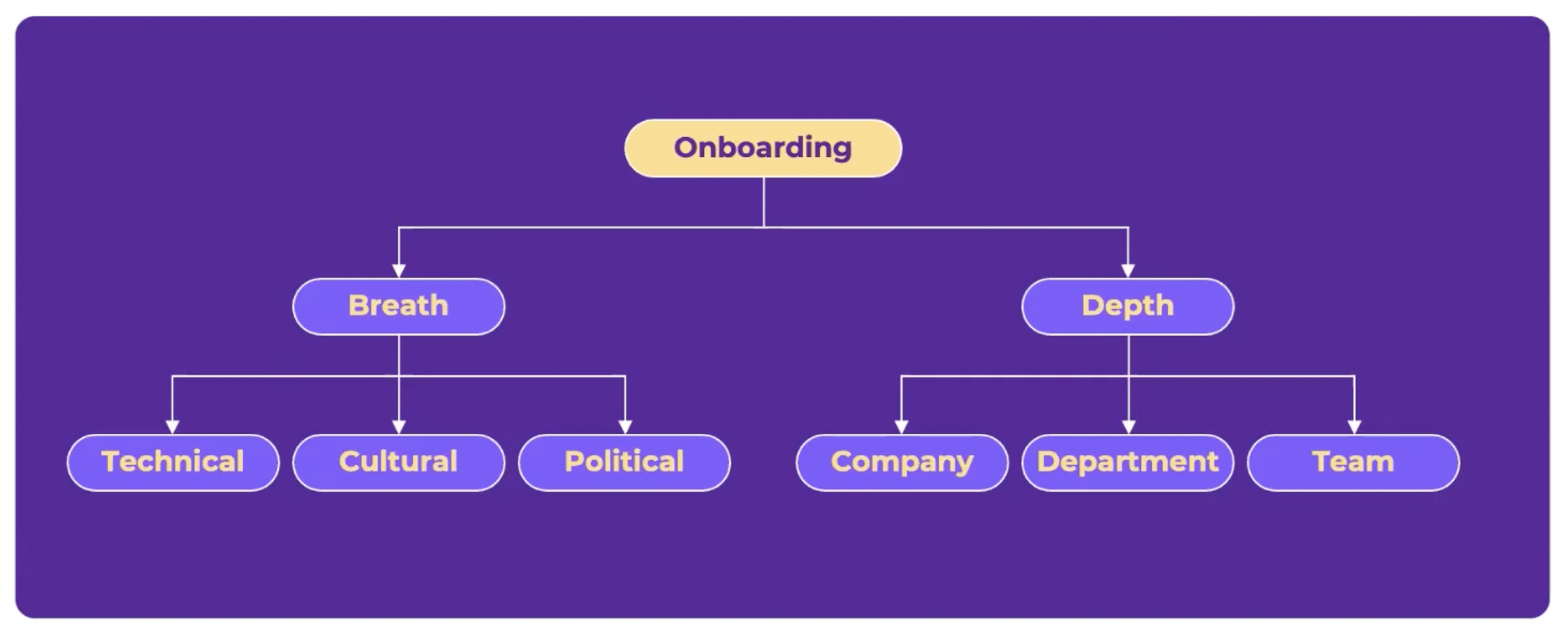
For the success of a new member, there are a few key aspects that are important to have a good understanding of:
Breath
- Technical learning
- Cultural learning
- Political learning
Depth
- Company structure and strategy
- Department structure and strategy
- Localization structure and strategy
Learning and Growing
Learn Together
A team that learns together grows together.
- Schedule time for learning
- Knowledge sharing
- Localization learning
- Non-localization learning
- Cross-functional sharing
- External speakers
Grow Together
- What is holding the team back
- Where the team might want to pay more attention to
- Where the team is already doing an amazing job
Team Psychological Safety Assessment
- When I make a mistake, it will not be held against me
- It is easy to bring up problems and tough issues
- It is safe to take risks
Develop a Culture of Feedback
- Truth Triggers
- Relationship Triggers
- Identity Triggers
Improve Together
Team Health Check
- Alignment
- Customer satisfaction
- Psychological safety
- Focus
- Process
- Motivation
- Distribution of work